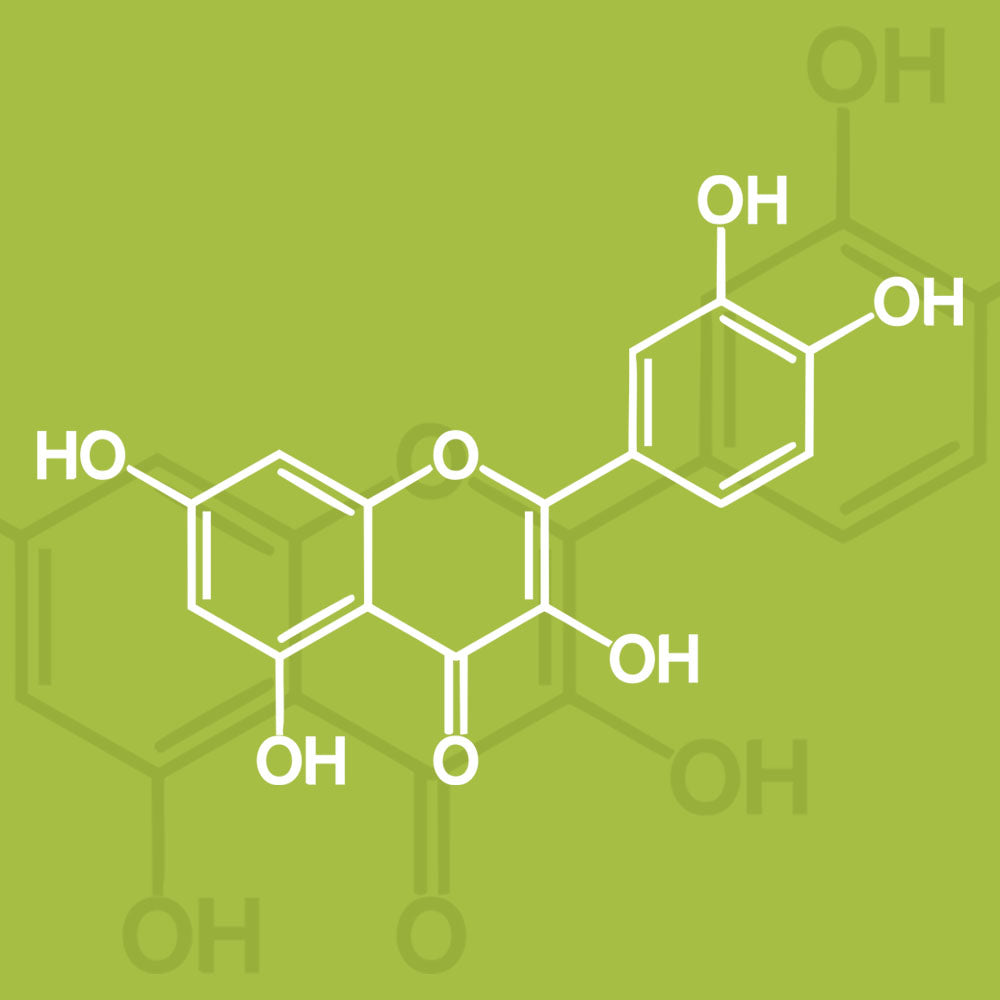
Quercetin: A Natural Ally Against Inflammation, Infection, and Oxidative Stress
By: Laria de Mestral
Quercetin is a naturally occurring flavonoid belonging to the broader class of polyphenols, which are plant compounds known for their antioxidant properties. It is widely distributed in various fruits and vegetables, with notable concentrations in onions, apples, berries, grapes, citrus fruits, capers and leafy greens.
In plants, quercetin contributes to pigmentation and defense against environmental stressors. In humans, it has attracted significant scientific interest for its diverse biological effects, particularly its anti-inflammatory, antioxidant, antiviral, and immunomodulatory actions.
1. Anti-Inflammatory Properties
Quercetin has shown anti-inflammatory potential in preclinical studies by modulating multiple molecular pathways involved in inflammation.
It has been found to inhibit key signaling pathways such as NF-κB and MAPK, which regulate the expression of pro-inflammatory cytokines including TNF-α, IL-1β, and IL-6.
Additionally, quercetin may suppress the activity of enzymes like lipoxygenase and eosinophil peroxidase, leading to a reduction in inflammatory mediators and oxidative stress. These mechanisms are particularly relevant in respiratory and allergic conditions involving eosinophilic inflammation and bronchoconstriction.
Furthermore, preclinical evidence suggests that quercetin may help restore immune balance by modulating the Th1/Th2 response. As allergic and chronic inflammatory conditions are often associated with Th2 dominance and elevated IgE production, quercetin's immunomodulatory effects may contribute to a reduced hypersensitivity and an improved immune regulation.
2. Antiviral Activity
Quercetin has demonstrated broad-spectrum antiviral activity in preclinical studies, interfering with multiple stages of the viral life cycle, including viral entry, replication, and assembly.
In vitro research has shown efficacy against several RNA viruses, including rhinovirus, influenza virus, and coronaviruses such as SARS-CoV and SARS-CoV-2.
Its proposed antiviral mechanisms include inhibition of viral proteases, disruption of virus-host receptor binding, and modulation of inflammatory cytokines that contribute to viral pathogenesis.
Additionally, in vitro studies suggest that quercetin may act as a zinc ionophore, thereby facilitating the transport of zinc into cells. Indeed, increased intracellular zinc may inhibit RNA-dependent RNA polymerase, which is a key enzyme in the replication of many RNA viruses.
3. Mast Cell Stabilization & Antihistamine Effects
Quercetin has been widely studied for its anti-allergic properties, particularly due to its ability to stabilize mast cells, which are immune cells responsible for releasing histamine, prostaglandins, and other mediators during allergic reactions.
By inhibiting mast cell degranulation, quercetin may reduce histamine release and help alleviate symptoms such as itching, sneezing, and swelling.
In preclinical models, quercetin has also been shown to suppress the production of antigen-specific IgE antibodies, a key driver of Type I hypersensitivity reactions.
Through its combined anti-inflammatory and immunomodulatory effects, including cytokine modulation and partial restoration of the Th1/Th2 immune balance, quercetin may therefore help manage histamine-driven conditions such as asthma, allergic rhinitis, and eosinophilic bronchitis, although further clinical research is needed to confirm these effects in humans.
4. Cardiovascular Health
Quercetin may support cardiovascular function, primarily through its antioxidant and anti-inflammatory effects, as observed in preclinical studies.
It acts as a free radical scavenger, protecting against the oxidation of LDL cholesterol, which is a major contributor to atherosclerosis. Preclinical studies also suggest that quercetin can enhance endothelial function, promote vasodilation, and reduce vascular inflammation.
All in all, preclinical findings and early clinical data suggest that quercetin may contribute to blood pressure regulation and improved vascular function, though further research in humans is needed to confirm these effects.
5. Anticancer Potential
In preclinical models, quercetin has shown several anticancer mechanisms, including: Inhibition of tumor cell proliferation, induction of apoptosis (programmed cell death), suppression of angiogenesis (limiting blood supply to tumors), protection of DNA from oxidative damage, as well as helping to prevent mutations that could lead to malignant transformation.
While most anticancer findings are derived from in vitro and animal studies, ongoing human research is exploring its potential as a complementary strategy in cancer prevention and therapy.
Overall, quercetin reduces inflammation, modulates immune responses, and interferes with viral activity. These diverse effects suggest quercetin may have potential as a complementary approach in managing allergies, infections, and chronic inflammatory conditions.
Sources :
https://www.mdpi.com/1420-3049/21/5/623
https://pmc.ncbi.nlm.nih.gov/articles/PMC6273625/
https://www.mdpi.com/1420-3049/21/5/623
https://pmc.ncbi.nlm.nih.gov/articles/PMC8662201/
https://pmc.ncbi.nlm.nih.gov/articles/PMC6273625/
https://www.frontiersin.org/journals/cardiovascular-medicine/articles/10.3389/fcvm.2021.658400/full
https://pmc.ncbi.nlm.nih.gov/articles/PMC5561933/
https://journals.plos.org/plosone/article?id=10.1371/journal.pone.0047516
The information provided in this article is intended for educational and informational purposes only. It is not a substitute for professional medical advice, diagnosis, or treatment. Always seek the guidance of a qualified healthcare provider.